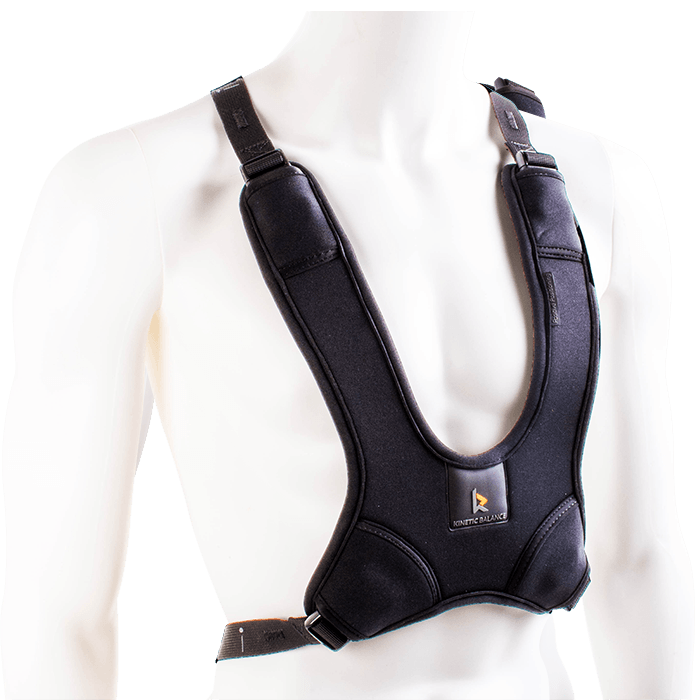
Head Harness
Holding the head upright is demanding work for a child with reduced head and neck control, and fatigue tends to arrive exactly when concentration is needed most. A head harness supports the head in midline — facing forward, centred over the shoulders — which is the position that makes eye contact, eye-gaze technology, reading and face-to-face communication possible. It also supports a safer head and neck position during eating and drinking.
For children who experience sudden extension patterns or involuntary movement, the harness provides a steady point of reference that reduces the force of those movements without blocking normal, voluntary head turning.
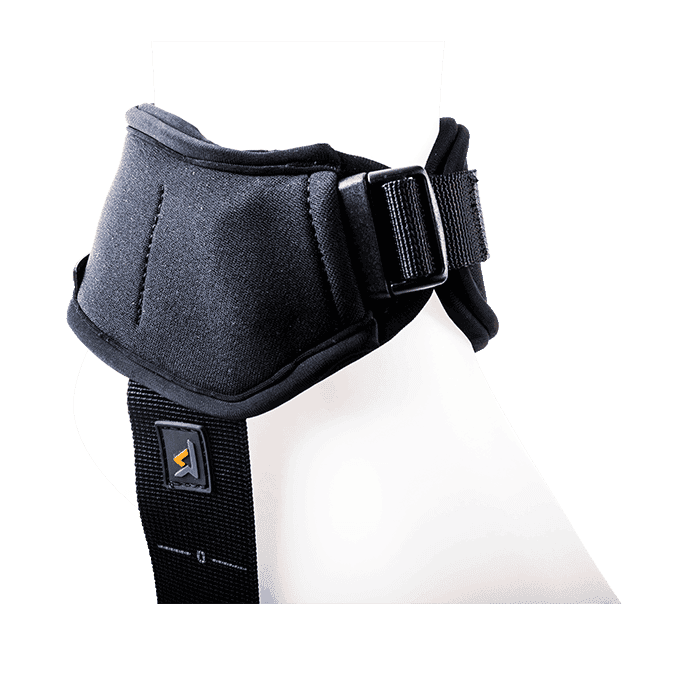
Soft neoprene padding rests against the forehead and sides of the head, spreading contact pressure across a wide area so the support feels gentle rather than restrictive, and protecting the skin during longer periods of use.
Head harnesses for school, institutions and home
Head positioning affects almost everything a child does with other people: looking at a face, following a lesson, operating a communication device, eating safely. Consistent support across the classroom, the therapy room and the home means the child recognises the position and can rely on it wherever they are.
Use in schools and day care
A head held in midline is a head that can look at the teacher, the whiteboard or the screen. For children using eye-gaze technology, stable head positioning is what makes the device usable at all. Reducing the effort of holding the head up leaves more energy for the lesson itself.
Use in care institutions and therapy settings
Where several staff share responsibility for the same child, head positioning has to be set consistently by whoever is on shift — and because it is the most individual of all our positioning products, the therapist’s settings should be documented and followed. Every head harness here is machine washable for shared hygiene requirements and built to withstand repeated daily handling.
Use at home
At home, the same support helps at the dining table, during screen time and in quiet moments in an activity chair. The familiar position from school carries over into the evening, and family members can manage the harness once shown the correct settings.
Fitting and safe use
Head positioning is highly individual, and the margin between helpful support and an uncomfortable or unsafe position is narrower than with other harnesses. A head harness must be assessed and fitted by the child’s physiotherapist or occupational therapist before use, and the settings should not be altered without their guidance. A head harness is a postural support aid, not a restraint. A child using one should remain under the supervision of a responsible adult at all times.